
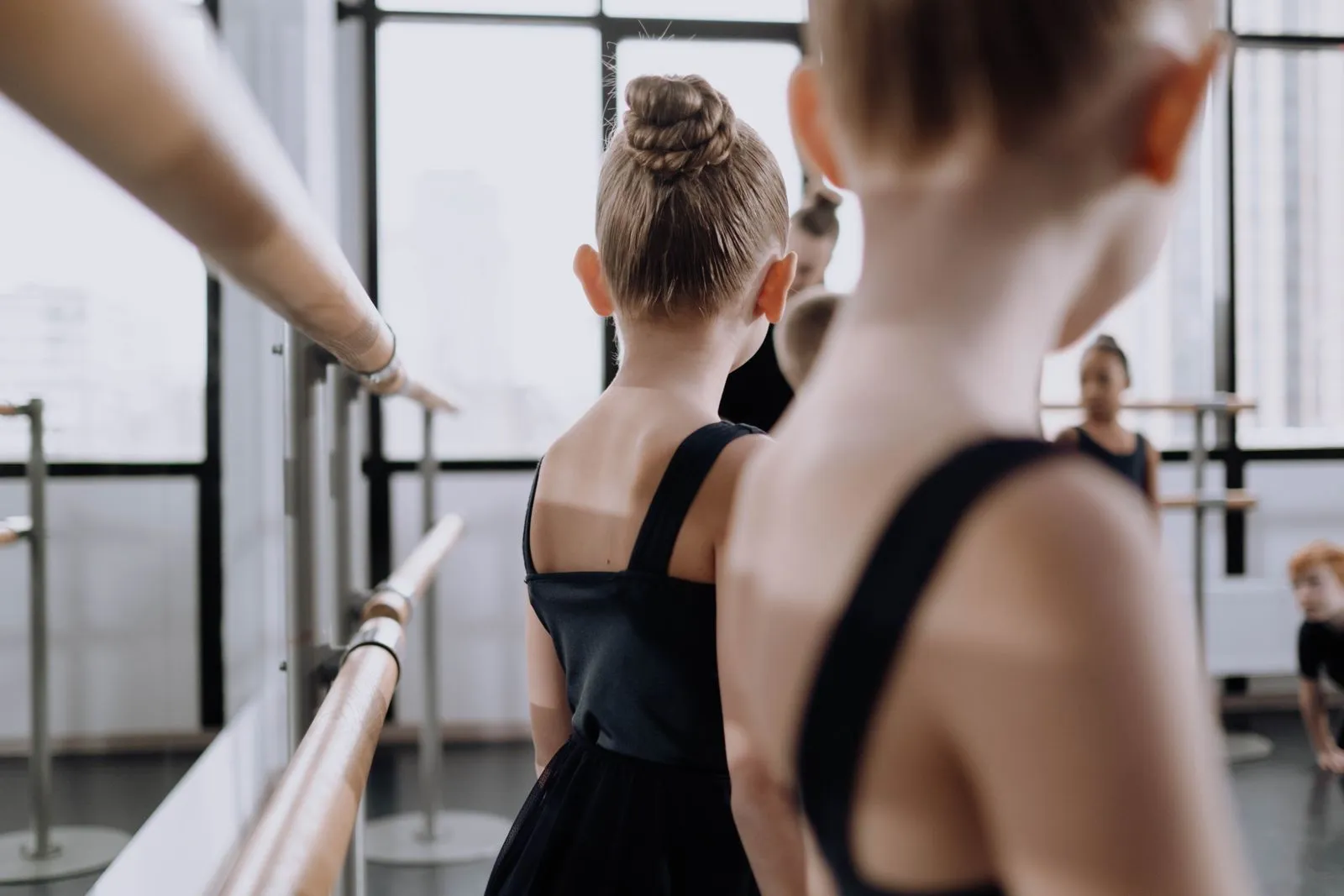
Your barre outfit does not need to be complicated. Choose clothing that lets you bend, stretch, and hold small movements without slipping or needing constant adjustment. Since classes often include floor work and exercises at the barre, comfort and coverage matter as much as flexibility. Footwear is simple, too: many studios ask participants to wear grip socks rather than dance shoes. If you are unsure about a specific item, check the studio’s guidance before class.
Choose Flexible, Close-Fitting Clothes
Leggings or fitted athletic pants are practical choices because they move with you and make it easier to see your leg alignment. Look for a waistband that stays in place when you bend or lift your legs. A fitted top or breathable athletic shirt can help keep fabric from falling forward during floor exercises.
You do not need special dancewear to start. Pick clothes you already feel comfortable exercising in, and test whether they stay put when you reach overhead, squat, and lie on your side. Avoid overly loose sleeves or wide pant legs if they might catch on the barre or make it harder for the instructor to see your form.
Plan for Support and Comfort
Wear an athletic bra that provides the level of support you prefer for low-impact movement. Barre classes include repeated pulses, standing balance work, and stretches, so choose a fit that feels secure without restricting your breathing or shoulder movement.
Check seams, waistbands, and closures before class. Anything that digs in while you sit or stretch can become distracting. If you tend to get warm, breathable layers are useful; if the studio feels cool at first, bring a light layer you can remove once you are moving.
Wear Grip Socks for Stability
Many barre studios require or recommend socks with grippy soles. The small traction points can help reduce slipping on a smooth floor, especially during balance exercises. Regular socks may slide, while bare feet may not meet a studio’s hygiene or safety guidelines.
Choose grip socks that fit snugly without bunching under your toes or heel. If you already own a pair, check that the grips are intact and that the socks stay in place as you point and flex your feet. Confirm the studio’s footwear policy in advance, since requirements can vary.
Keep Your First-Class Bag Simple
Bring a water bottle and arrive in clothes that are easy to move in. You usually do not need dance shoes, leg warmers, or special equipment for a first class. If you plan to change at the studio, pack your workout clothes and grip socks together so you can find them quickly.
Before leaving home, do a quick movement check: raise your arms, fold forward, and bend your knees. Adjust anything that shifts, slips, or feels restrictive. Harbour Barre in Victoria can answer questions about its class attire and footwear expectations before you visit.
For barre, the best outfit is one that stays comfortable and secure through small, controlled movements. Start with flexible fitted clothing, supportive undergarments, and grip socks, then adjust based on what feels right. Check your studio’s specific guidance before your first class, and reach out if you have questions about what to bring.